
What is the Green Fee?
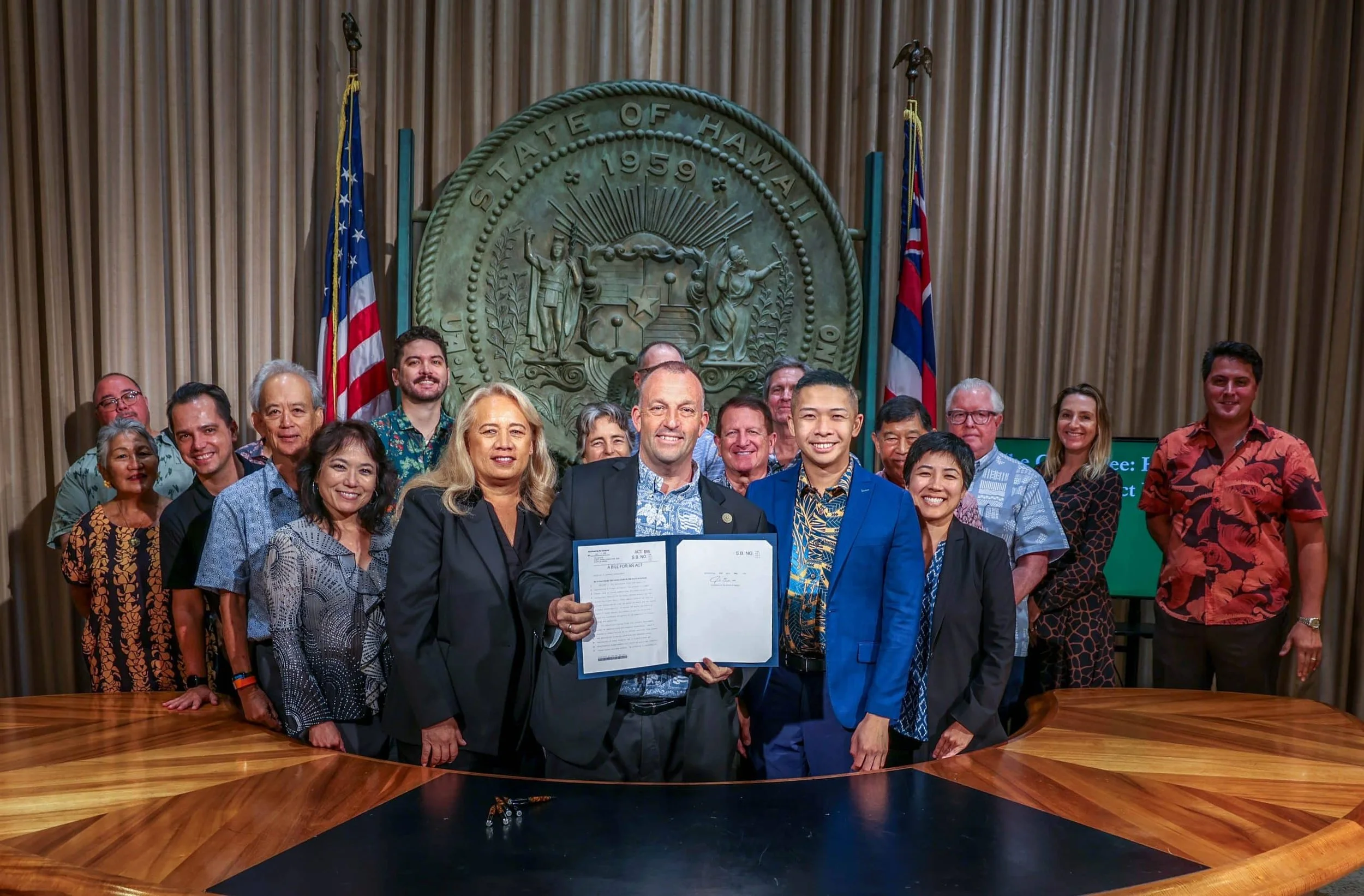
In 2025, Governor Green signed into law Act 96, or the Green Fee, which is the nation’s first-ever climate impact fee.
The Green Fee generates roughly $100 million per year and provides us with a long-term, sustainable funding source to address climate change, improve disaster resilience and recovery, protect our state’s precious natural resources and nurture regenerative tourism.
Funding Categories
As directed in Act 96, Green Fee funds are equally allocated across three key, interconnected categories that address healthy ecosystems, resilient communities and positive visitor experiences. While some projects might fit more than one category, the Green Fee Advisory Council makes determinations on which category they most aligned with to ensure each received a nearly equal total funding amount.

Environmental Stewardship
Projects that protect and restore Hawai‘i’s natural systems, which serve as the state’s first line of defense against the negative impacts of climate change and disasters. Key focus areas include:
-
Restoring native forests, managing invasive species and protecting biodiversity.
-
Strengthening coral reefs, wetlands, shorelines and nearshore environments.
-
Protecting aquifers, streams and watersheds critical to water security.
Climate and Hazard Resilience

Projects that reduce risk from natural hazards and improve community safety as climate impacts intensify across Hawai‘i. Key focus areas include:
-
Reducing wildfire risk through vegetation management and community preparedness.
-
Addressing flooding, erosion and storm surge with updated data and natural solutions.
-
Reducing overlapping risks such as wildfires, flooding, hurricanes and other severe weather events.
-
Strengthening shelters and emergency readiness, including acute food security and evacuation plans.
-
Piloting solutions to reduce cesspool pollution in areas vulnerable to sea level rise.
-
Improving climate and hazard data to support better decision-making.

Sustainable Tourism
Projects that help manage visitor impacts while protecting the natural and cultural resources that support Hawai‘i’s communities and economy. Key focus areas include:
-
Improving safety, erosion control and facilities at high-use sites.
-
Promoting responsible recreation and shared care of places.
-
Strengthening staffing, systems and tools to sustainably manage visitor use in high-volume areas.
Appropriations can also be made for monitoring and evaluation projects that support transparency and accountability for Green Fee funds.
From Recommendations to Final Funding
The Green Fee Advisory Council undertakes a collaborative and deliberative process that balances known community needs and input, consultation with state agencies and departments and alignment with the law.
In 2025, the council evaluated over 500 project ideas submitted by the public and departmental agencies while developing its recommendations. The Governor formally transmitted 75 of the council’s funding recommendations to the Legislature through a Governor’s Message, which can be viewed here. The legislature considered these recommendations during the 2026 legislative session and appropriated funding for 49 of the council’s recommendations.

September - November
Develop clear criteria to evaluate potential funding priorities for Green Fee funding, with a focus on impact, feasibility, cost and alignment with the intent of the legislation.

November - December
Once funding priorities are evaluated by the council, it provides the Governor with a prioritized list of recommendations, along with an accompanying budget for consideration and inclusion in the Executive Supplemental Budget. The Governor formally transmits the funding recommendations to the Legislature through a Governor’s Message.

January
During the legislative session, state legislators consider the recommendations made by the council and determine how Green Fee money will be appropriated through the state budget bill. The Advisory Council’s role is to provide recommendations and guidance.

Spring
In tandem, the council develops and presents process recommendations for how future years of Green Fee funding should be appropriated.
The Council’s Year 1 Funding Recommendations
The Green Fee Advisory Council’s Recommendations Report outlines how Year 1 Green Fee revenues can be best invested to address the state's environmental, climate resilience and sustainable tourism needs during the 2026 legislative session. The report explains how projects were evaluated and describes how these recommendations informed the Governor’s budget proposal and legislative consideration.