
Understanding the Green Fee Advisory Council’s Evaluation Criteria
Evaluation Criteria: How Green Fee Proposals Are Scored
During its recent webinar, the Green Fee Advisory Council walked through the five criteria used to evaluate all Green Fee project proposals:
Results
The project achieves tangible outcomes that reduce harm, build resilience, and contribute to the protection and restoration of ecosystems and communities
Readiness
The project will be completed on time, with all necessary access, permits, and compliance requirements in place or planned for. Existing infrastructure and systems are ready to support timely project implementation.
Relevance
Grounded in data, traditional knowledge, and management plans, the project protects natural resources, strengthens resilience, or supports destination management and site improvements.
Relationships
The project leverages additional resources and fosters collaboration among government, NGOs, and community partners. It is community-led or demonstrates strong, responsive relationships with climate-vulnerable and historically underserved communities.
Region
The project is located in an area with demonstrated need, particularly one that is vulnerable to disaster risks or overtourism, or that typically receives insufficient funding.
Scoring Process
Each project is reviewed by at least three Council members and scored on a 1 to 4 scale in each category.
4: Excellent - Clearly exceeds expectations; demonstrates exceptional alignment with criteria
3: Good - Meets expectations; mostly aligns with criteria, with some minor gaps
2: Developing - Partially meets expectations; mostly lacks alignment with criteria
1: Limited - Does not meet expectations; no alignment with criteria
Additional considerations, such as cost-effectiveness and transparency, were also used to inform the Council, but do not affect the final score due to inconsistent data availability.
Overview of Evaluated Projects
The Council also shared a high-level overview of project ideas received from two main sources: state departments or agencies, and the public.
Departmental Proposals
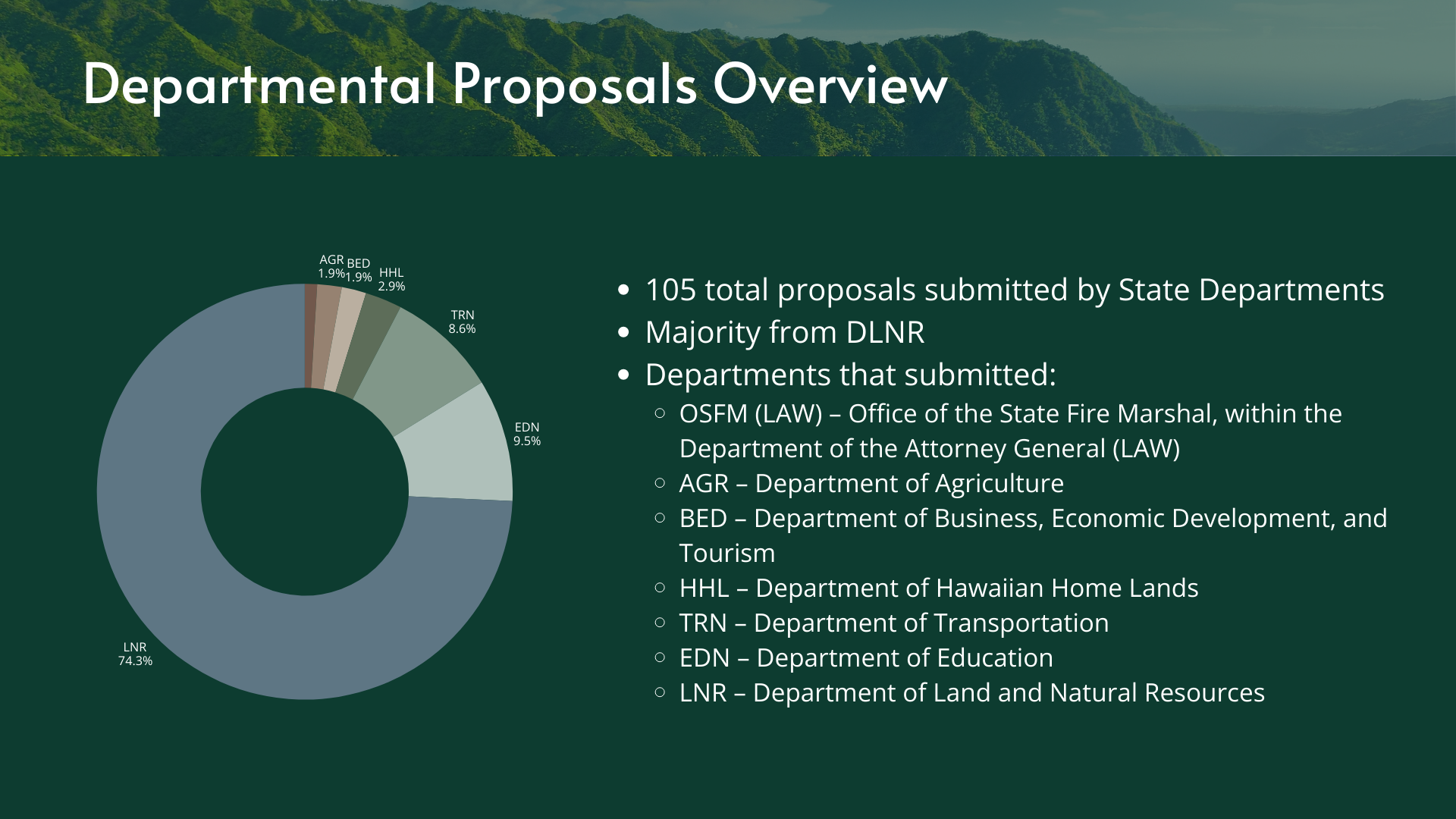
State departments and agencies submitted 105 formal project proposals through the Department of Budget and Finance’s supplemental budget request process. These proposals represented a wide range of environmental, resilience, and tourism-related priorities across state governments.
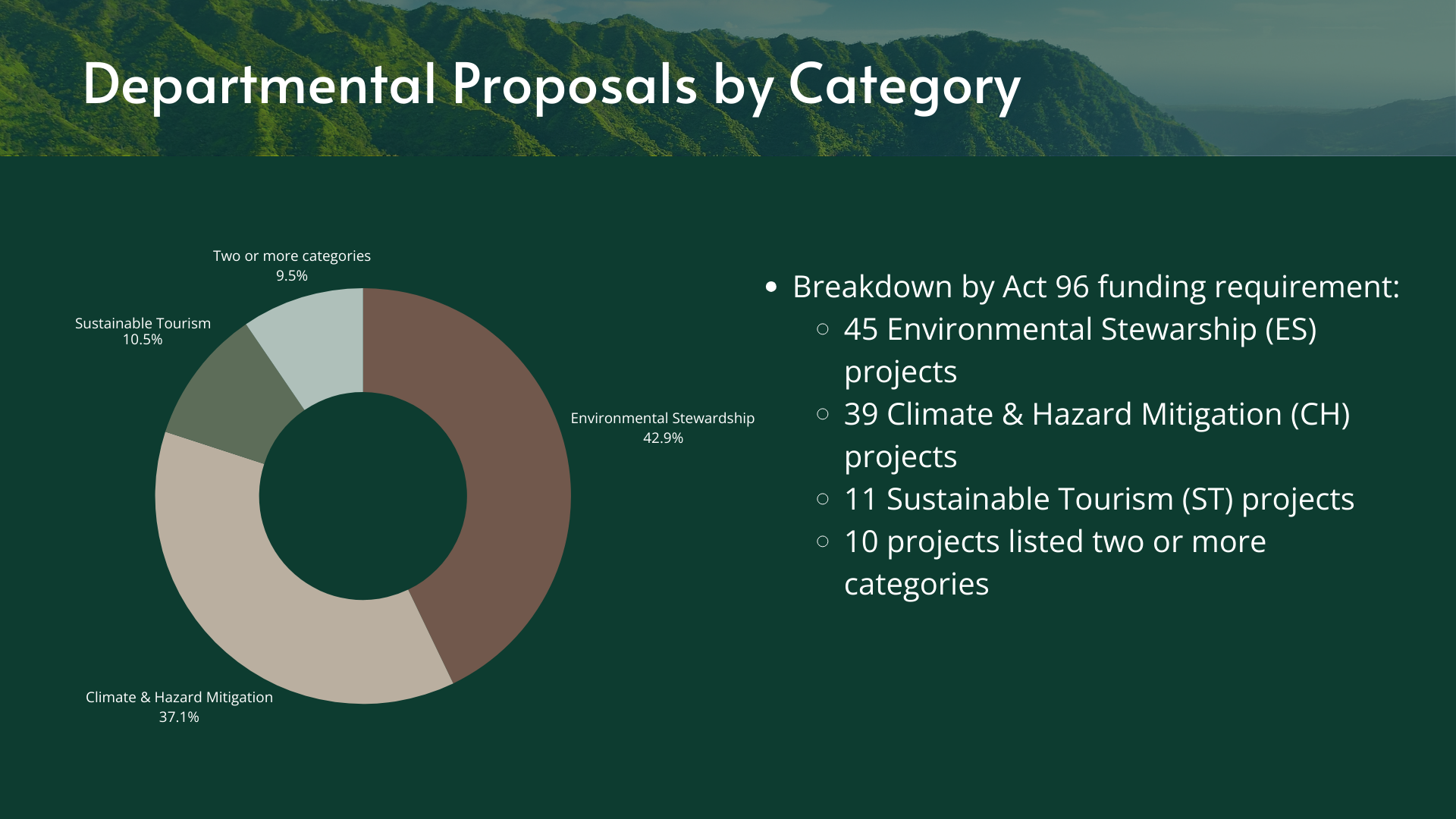
The majority of proposals came from the Department of Land and Natural Resources, followed by the Department of Education, Transportation, Hawaiian Home Lands, Agriculture, and others. Most departmental proposals aligned with the Act 96 categories of Environmental Stewardship or Climate and Hazard Mitigation, reflecting statewide needs in ecosystem protection and climate resilience.
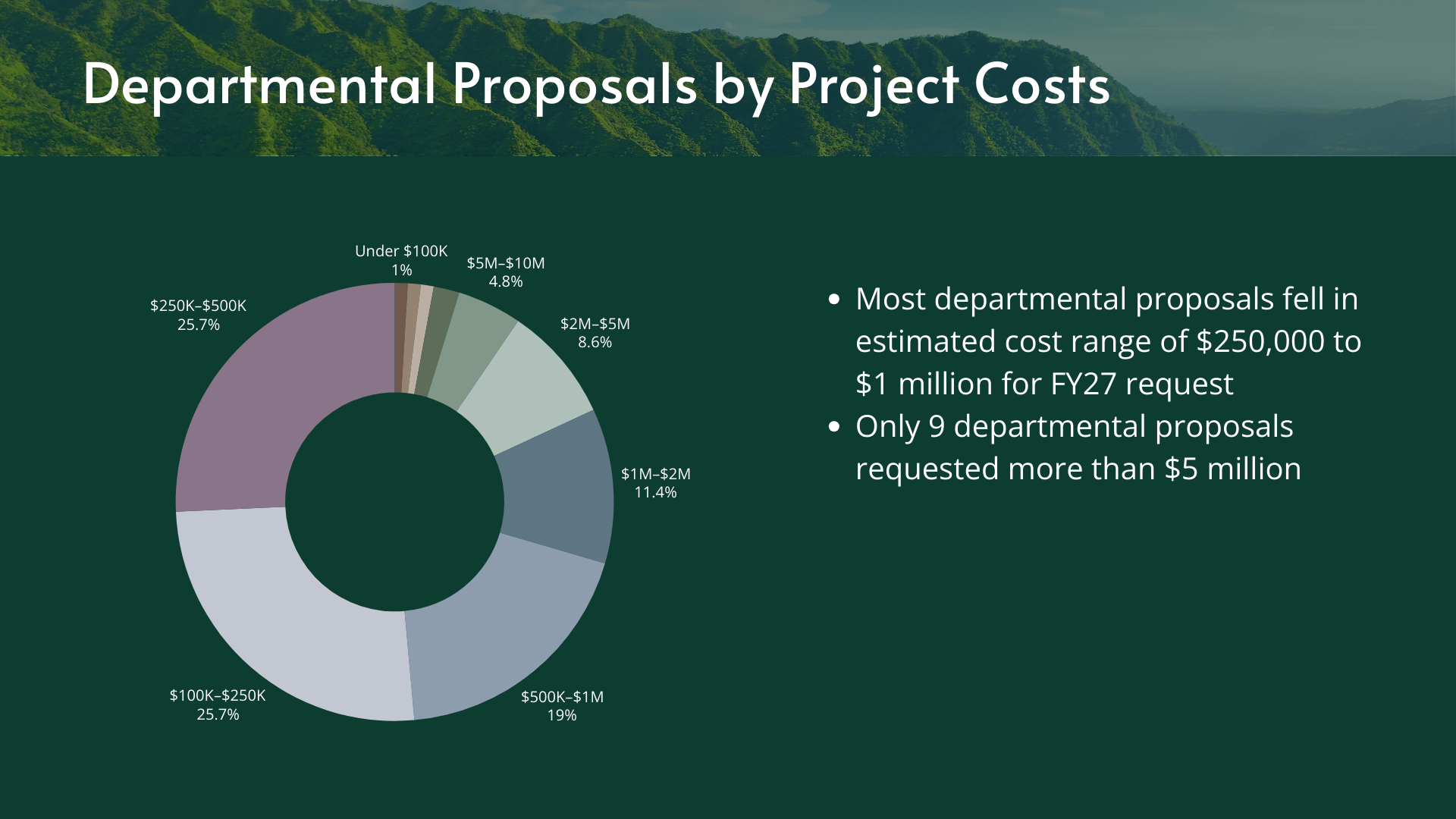
For FY2027, most departments requested between $250,000 and $1 million per project, which aligns with early estimates of scalable, shovel-ready initiatives that departments could implement during the first year of Green Fee funding.
Public Ideas Portal
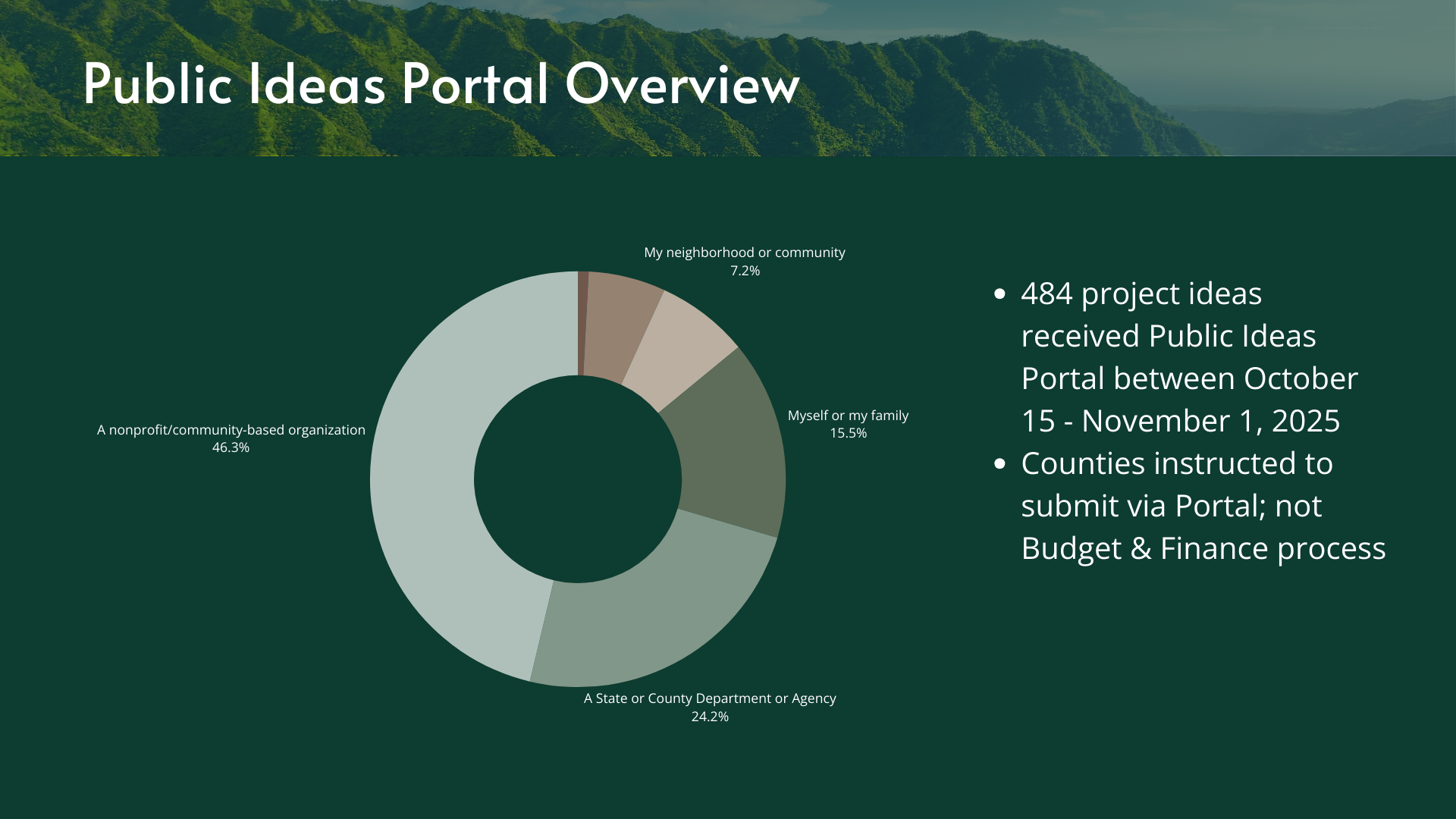
From October 15 to November 1, 2025, the Advisory Council received 484 project ideas from community members, nonprofits and community groups, local businesses, and counties. These submissions reflect strong public engagement and a wide spectrum of ideas on how to steward Hawaiʻi’s natural and cultural resources.
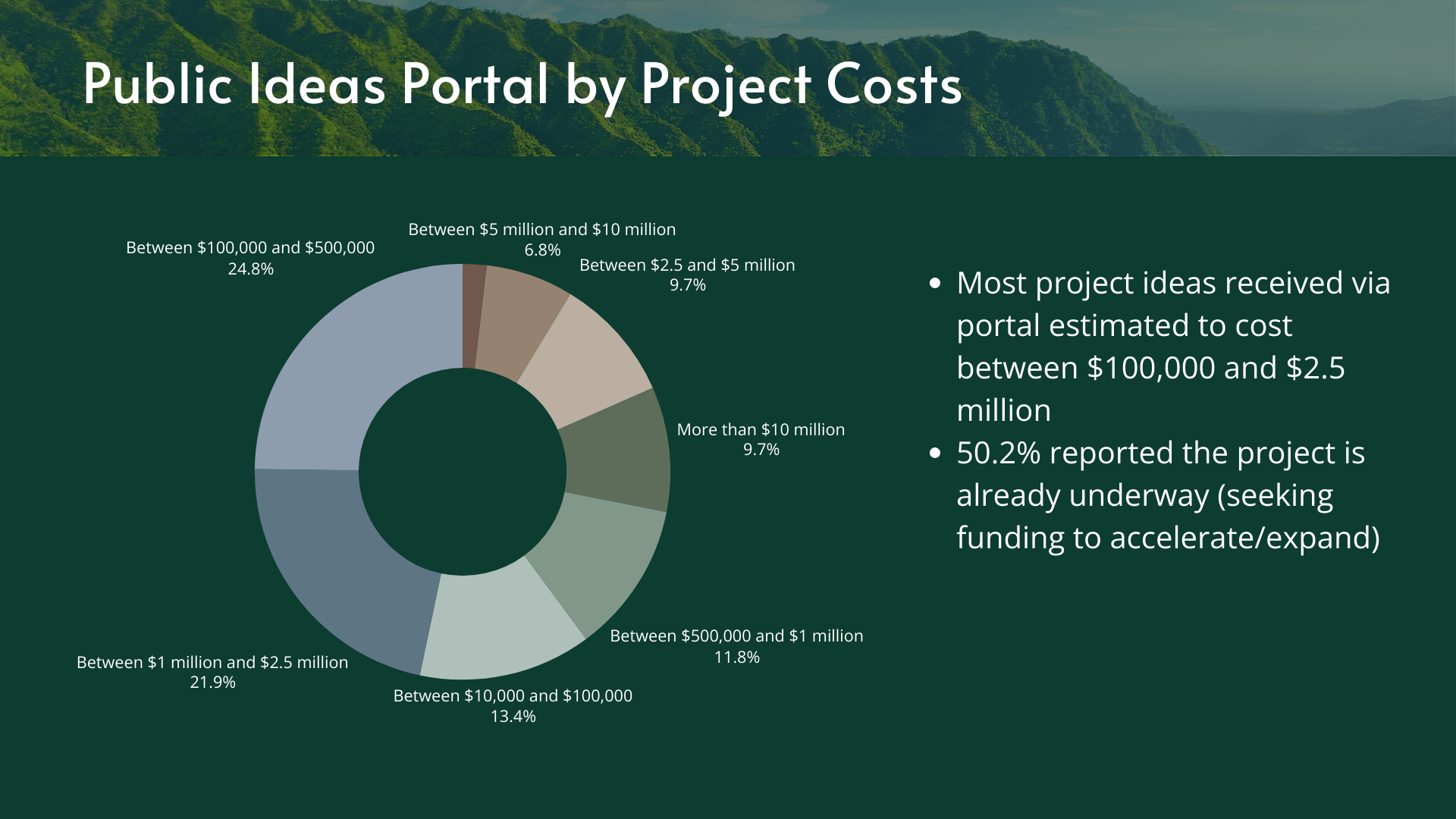
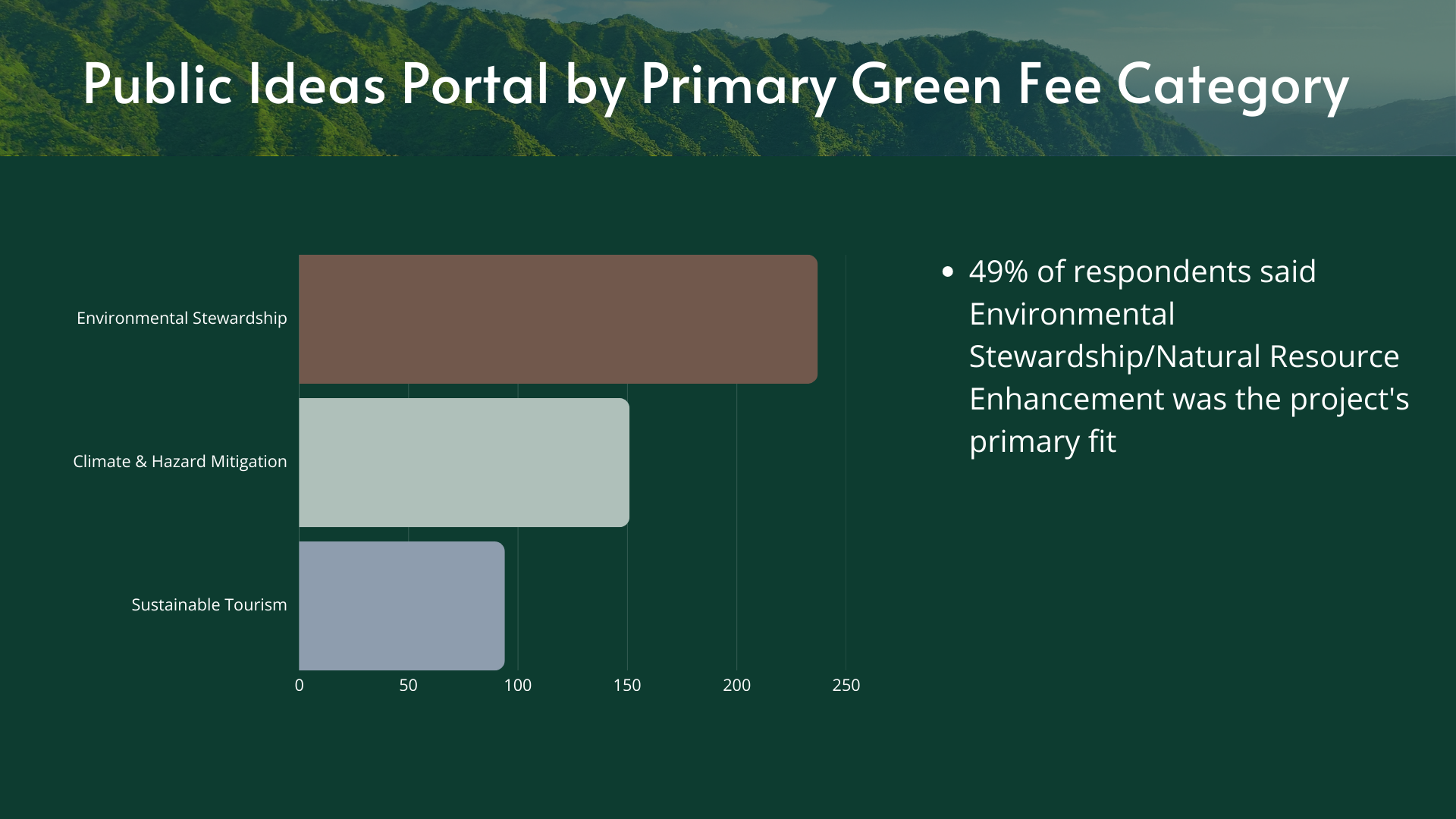
Nearly 49% of respondents identified Environmental Stewardship or Natural Resource Enhancement as their project’s primary category. Most project ideas included estimated costs between $100,000 and $2.5 million.
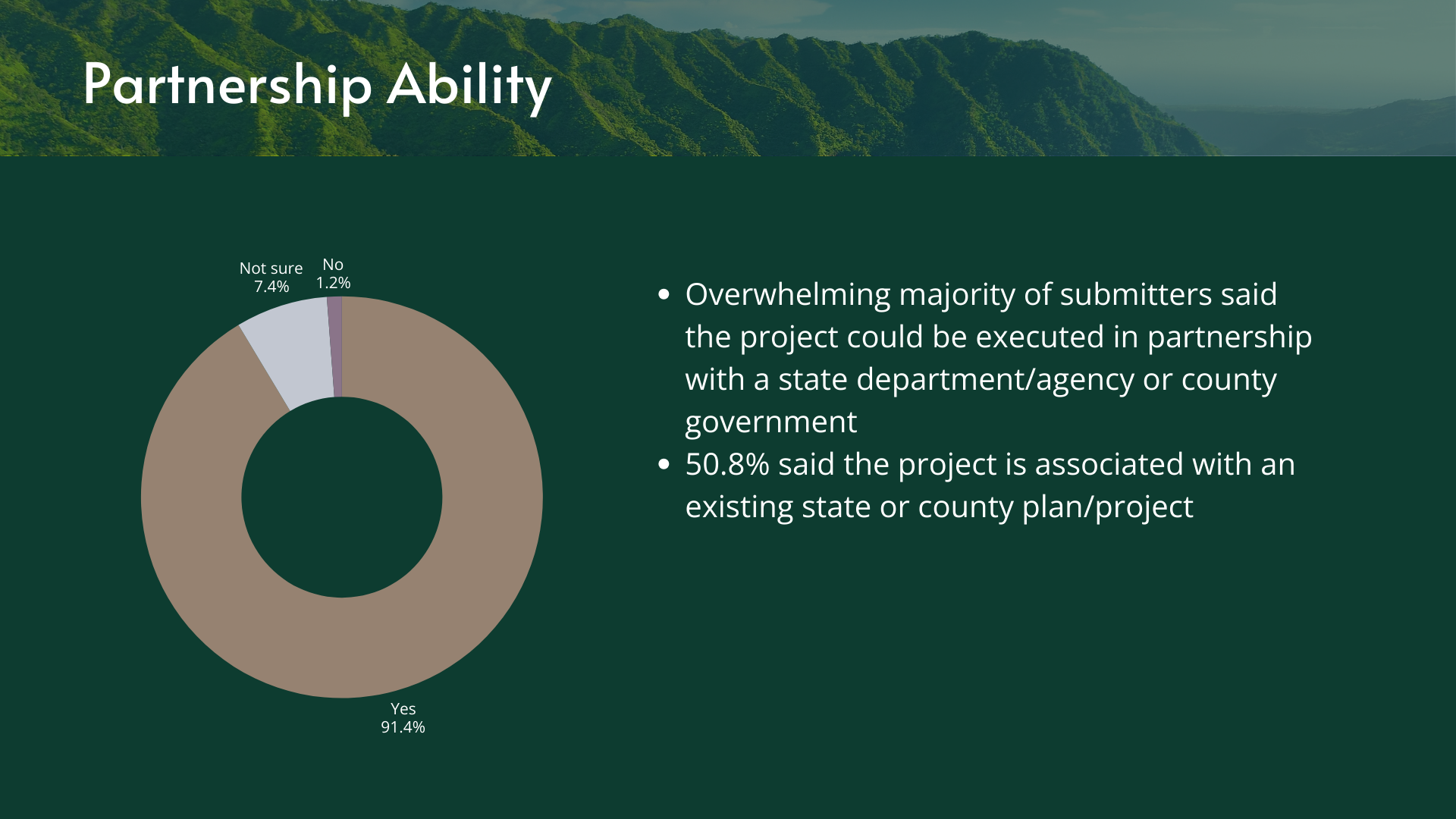
More than 50% of the projects submitted by the Project Ideas Portal are already underway and are seeking funding to accelerate or expand ongoing work, which strongly aligns with the Council's readiness criteria. Additionally, 91% of submitters indicated that their project could be executed in partnership with a state or county agency, demonstrating broad alignment with the public-sector partnership requirements of Act 96.
Resources
